
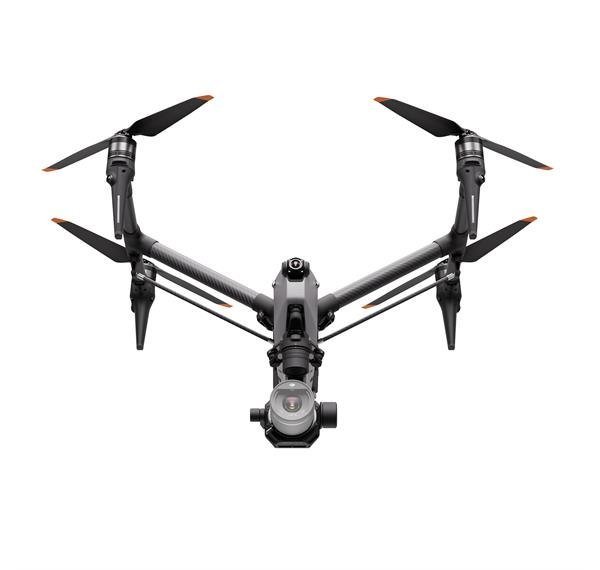
DJI Inspire 3
Original price was: $16,499.00.$16,000.00Current price is: $16,000.00.

+44 7908 409597 Start Live Chat
Description
Buy DJI Inspire 3 Online
DESCRIPTION
The Inspire 3 is spectacular, no question. It’ll also provoke some irritation, from those hoping for an E-mount, or brighter controller. If you price this high, people expect a lot. But ultimately the power on offer – especially for filmmakers needing the quality.
Pros
- +8K Camera ProRes and Cinema DNG
- +3D dolly with RTK option
- +Excellent travel case and rugged charging hub
- +Stunning dynamic range imaging
- +Use the AI OR a second pilot
Cons
- -Takes time and care to set up and pack
- -No built-in ND filters
- -RTK base station not included
- -Not battery compatible with Ronin 4D
If anyone is counting, the DJI Inspire is probably owed an award as the industry’s “Most Changed Drone.” In its first iteration, it had a white shell like the iMacs of its day, and was definitely impressive, with a 4K camera, but still felt like a high-end consumer device.
Since then DJI’s Inspire has grown up. There was a pro edition, then the metallic Inspire 2 introduced interchangeable lenses and high-budget production teams took notice. Even then, however, the cash-rich enthusiast could dip into their pocket for a cheaper edition, recording to a budget-friendly MicroSD card. The ProRes license and recording to DJI SSD were optional.
The Inspire 3, however, has gone all in on Pros. It makes a certain sense. The Mavic 3 Pro now offers ProRes and multiple camera choices for a single operator needing portability, while regulations make bigger drones a more difficult choice. That means we’re looking at a no-compromise device for pro productions. The question is, have DJI made the right choices? Oh, and if you’re a money-no-object enthusiast is there something here for you too?
The Inspire 3 is nothing less than a flying cinema camera. It brings together all the drone tech improvements from the nearly seven years of development since the Inspire 2, and adds a full-frame 8K camera – the Zenmuse X9-8K Air. That camera, of course, has interchangeable lenses. Now we’re off to the races (it is not, however, the same camera as the Ronin 4D, and they’re not interchangeable).
The Inspire 3 records Cinema DNG, ProRes RAW, ProRes 422 HQ and good old H.264 to a removable SSD card. There is no MicroSD port. A 1TB DJI Pro SSD card is included, and it has a USB-C socket with 900MBps read (this isn’t the same as the CineSSD from the Inspire 2, but is established with the Ronin 4D).
The airframe changes shape after take-off to allow a second operator to steer the camera around 360 degrees while a pilot flies using the much improved forward-facing camera. Dual batteries mean you can land and hot-swap without powering down completely.
An all-direction collision sensor array is complemented with RTK, making it possible to create repeatable “3D Dolly” shots, meaning this drone could replace much less portable cinema gear.

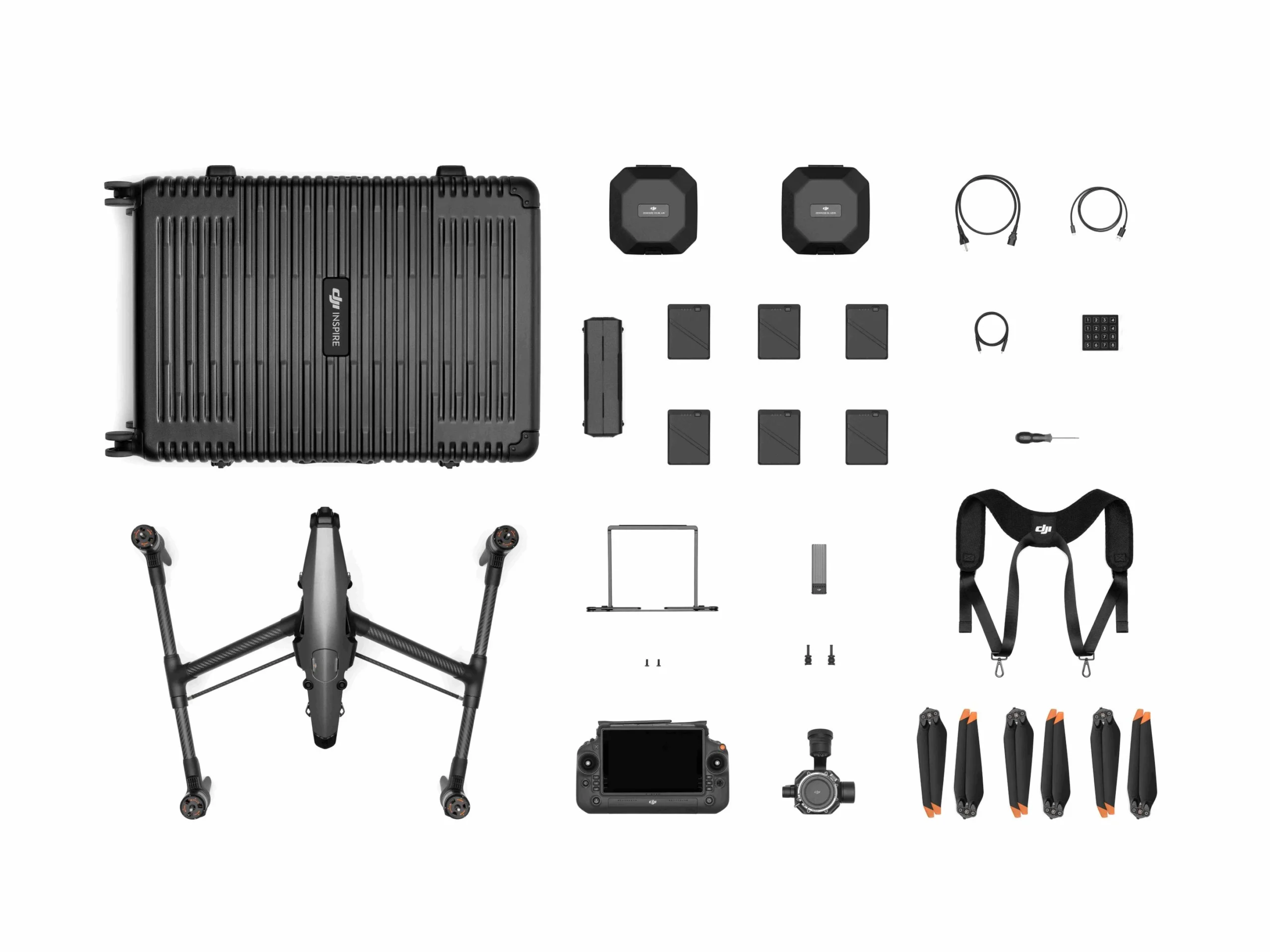
The Inspire 3 is supplied in a large suitcase-sized trolley case, the external shell of which is top quality and the inside carefully trimmed to allow the drone and all its accessories as little room for movement as possible. This is an enormous improvement on the Inspire 2 box, and even better than the Inspire 1 case. Opening it is gadget-lovers dream, though it is also a little bewildering.
The magic of the Inspire series design is the aircraft’s ability to re-shape itself, from landing (legs below fuselage), travel (legs and fuselage as flat as possible), and flight mode (legs and props up). That means you’re immediately faced with an assembly exercise every time you open the box – it will always take longer than a Mavic-stlye folding drone. Oh, and the camera isn’t attached either, so there is that.
The new DJI RC Plus / RM700B controller is massive, built around an enormous and responsive screen which DJI say is 1,200 nits. I know I didn’t have any trouble seeing it out in the sun.
At first, it might seem almost insanely unmanageable, especially if you’re used to more compact drones, but DJI’s clever strap and, well, I’m going to say ‘gut rest,’ though I believe ‘waist support’ is the official term, in the form of a foldable frame. I found this very comfortable.
The Android-based OS can use your phone as an access point, handy not just for mapping but the tutorials which are provided with DJI’s usual panache.

I didn’t find any need for the additional swappable battery bay. After setup and burning through 5 pairs of batteries of actual flight, I had only used about half of the power the controller’s built-in battery holds (DJI say 3.3 hours).

Since I had to charge the main batteries, it was simple to plug the controller into a USB-C. The socket at the top has a rugged but well-labeled cover. It’s next to an HDMI which works not just for live monitoring but replaying, unlike the Inspire 2. Very handy, I imagine, showing things to a director.
Hidden inside the Inspire 3’s hull are dual antennas (front and back) and we certainly had no concerns about the signal in the 500m line-of-sight we were allowed to test in. Not even a hint of a glitch on the video preview. O3, DJI’s name for their radio control system, seems flawless within the distances we could test – and we imagine a couple of miles, too.

Related products
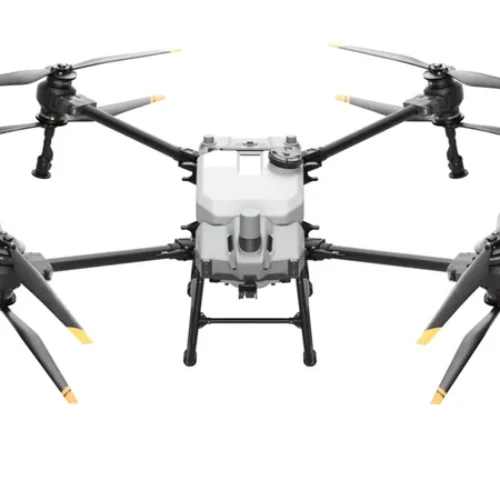
DJI Agras T40 Sprayer Drone
Original price was: $19,999.00.$19,599.00Current price is: $19,599.00.

Recently Viewed Products
DJI Inspire 3
Original price was: $16,499.00.$16,000.00Current price is: $16,000.00.
At Zego Mobile Wholesale, we are committed to delivering orders safely and efficiently to our wholesale clients worldwide. We work with reliable international logistics partners to ensure secure and timely delivery.
Copyright 2025 © Trusted by google.
Reviews
There are no reviews yet.